
Skin Conditions and Emotional Health: What Eczema, Psoriasis, and Chronic Inflammation Are Really Telling You
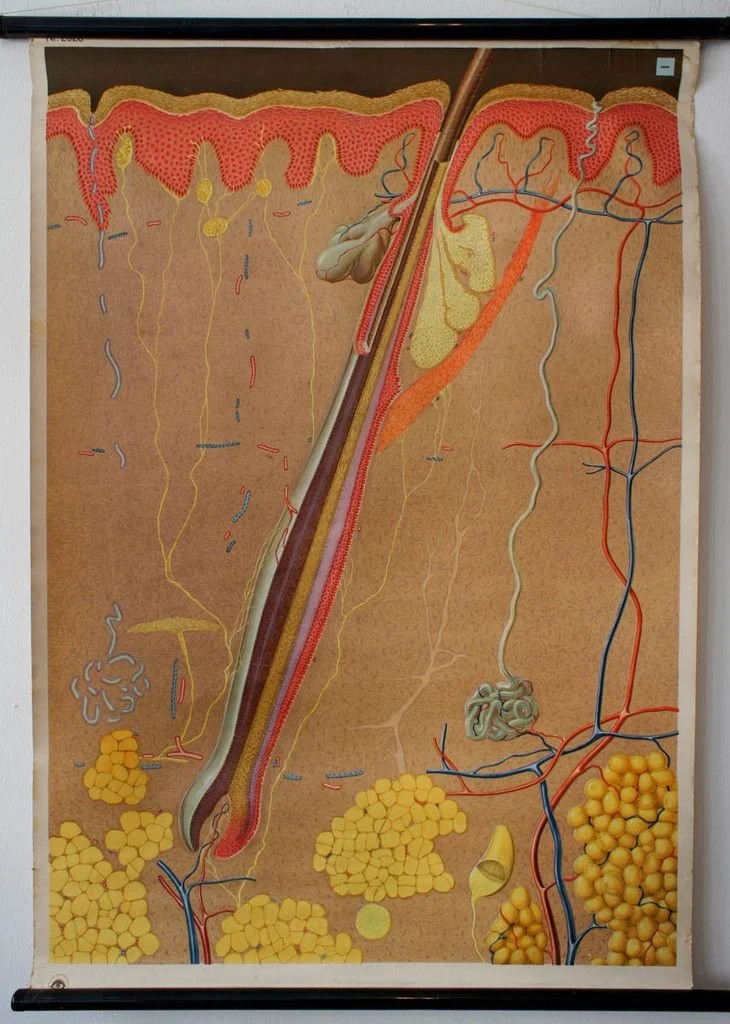
The skin's anatomy reveals why it functions as an independent brain—with its own nervous system, neurotransmitters, and ability to process emotional information before the mind registers it.
A medical intuitive's guide to understanding the mind-body connection behind skin problems—and how to decode what your body is trying to say
If you've struggled with chronic skin conditions—eczema that won't heal, psoriasis that flares without warning, or inflammation that appears whenever you're stressed—you already know something your doctors may not tell you: your skin is trying to communicate something deeper.
This is the fifth in my series, Decoding the Secret Language of Your Body. In the last piece, we explored the liver—where resentment, frustration, and anger reside. Now we move to the skin: your body's boundary, brain, and mirror of the soul.
The Skin-Brain Connection: Why Your Skin Knows Before You Do
In the third week after conception—before the heart beats or the spine forms—a single sheet of cells divides. Half will become the brain. Half will become the skin. They're the same tissue making different choices about how to meet the world. One turns inward to interpret experience, the other turns outward to receive it.
The skin was already sensing before there was a mind to make sense of it. This is why your skin knows things before your mind catches on. Why it flushes when you're ashamed, prickles when you're afraid, breaks out when you're overwhelmed. The skin was the brain before it became the boundary.
Scientists Call the Skin a "Mirror of the Soul"
That's the actual title of a peer-reviewed study. Researchers are confirming what mystics—and medical intuitives—have said for centuries: the skin reveals what the body is holding.
When emotions are pushed down, the body pushes back. The skin speaks through redness, itching, breakouts, inflammation. It holds the words we never said. This is biology in action—your body making meaning visible.
How the Body Stores Trauma in the Skin
The skin carries the stories we don't fully acknowledge. It absorbs the impressions we avoid, the emotions we mute, the truths we swallow. It remembers every collapsed boundary, every moment you said yes while your deeper self whispered no. It remembers the pressure of expectations, the weight of old patterns, the places where you learned to shrink or stay silent.
Your skin holds memory more faithfully than your mind. Even after wounds heal and scars fade, the tissue retains the emotional signatures—fear, shock, abandonment, betrayal.
This is why a surgical scar tingles during an argument.
Why an old burn itches during heartbreak.
Why a childhood injury tightens during adult conflict.
When the present echoes an old wound, the skin reacts as if it's happening now. The skin is the map of your life. It is your becoming, your breaking, your survival. Every mark contains a story you lived through and your body still carries.
Understanding the Emotional Roots of Skin Conditions
What shows up on the surface is rarely about the surface. Irritation, redness, inflammation—these are reflections of inner agitation. Something unsettled. Something unspoken. Something trying to rise.
When the psyche pushes something down, the skin pushes back.
When the mind denies, the skin reveals.
When emotion is blocked, the skin becomes the messenger.
The body speaks in sensation when words aren't available. Sometimes this comes as heat. Sometimes as a prickling tightness. Sometimes as a sudden flush or a spreading patch of red. The skin reacts to emotional truth long before the conscious mind understands what's happening.
When we pay attention to these first signals—the texture shifting, the tension gathering, the subtle pulse under the surface—we start to recognize how the skin tells our emotional history in real time. The skin reflects the frequency we carry. It reveals the story beneath the story.
Color Shapes Perception
Our skin serves as protection, keeping our internal organs and systems safe and secure. Yet it's the color of this tissue that ignites fear, builds hierarchies, and justifies violence.
Skin is the only organ we judge, vilify, and stereotype. We've built entire identities around a body part. No one has ever been feared or revered for the color of their liver.
Feeling: Our Most Ancient Language
Before you could hear your mother's voice or see light, you had skin—and it was already sensing and responding. By eight weeks in the womb, the face develops sensitivity to touch. The body learns to feel before anything else. Feeling is our first language.
The Skin Has Its Own Nervous System
The body is a network of intelligences, each with its own processing power. The gut has its own brain. The heart has its own brain—40,000 neurons that process and decide. And now scientists propose the skin as yet another.
The skin runs on the same neurotransmitters as your brain. It senses pressure, temperature, chemical shifts. It processes what it encounters. It generates its own hormones. The skin isn't just covering you. It's reading the room.
This is why:
• Hair stands up when someone lies
• You sense danger before you understand it
• Emotional release happens through touch
The Skin Speaks First
When the skin encounters stress—pressure, heat, threat—it mounts its own response before the brain has a say. It releases hormones. It communicates directly with the immune system, the nervous system, the endocrine system. It's the body's first responder and its public face.
We already know this. It's in the language:
She gets under my skin.
He's thick-skinned.
I jumped out of my skin.
I'm not comfortable in my own skin.
It makes my skin crawl.
The skin is where the world meets us—where we toughen or stay soft, where threats penetrate, where we feel safe or invaded. The body's been speaking, but often we're not listening.
Why Stress and Burnout Show Up in Your Skin First
The skin is the body's earliest warning system—an oracle sensing emotional collapse long before the conscious mind can name it. Before you admit you're overwhelmed, before grief breaks the surface, before burnout settles in, the skin is shifting.
Cortisol rises. Texture changes. Hydration drops. Tone becomes uneven. The surface becomes reactive, fragile, and inflamed. The skin transforms while the mind denies.
Your skin predicts your breaking point. It absorbs the weight of unspoken fears, ignored intuition, emotional exhaustion. When the soul enters a period of reckoning, the skin whispers the truth: Something deep within is coming undone. The body feels the collapse before the mind surrenders to it.
The Emotional Consciousness of Organs
Every organ carries its own consciousness—a distinct way of interpreting emotional patterns you suppress or override. The emotional categories are universal, but each organ expresses them differently.
Anger in the liver stagnates.
Anger in the skin inflames.
Shame in the heart contracts.
Shame in the skin reveals itself.
Fear in the lungs constricts breath.
Fear in the skin prickles, tightens, and braces.
Each organ teaches a different facet of the same human wound.
The Emotions of the Skin
Anger simmers beneath the skin, building pressure with nowhere to go. Under suppression, the heat erupts—scorching the surface, flooding the tissue with inflammation. When anger is swallowed or stifled, the skin becomes the outlet. Itching. Burning. Protest. The body tries to purge the fire you refuse to speak.
Fear creeps and crawls. It slithers across the surface prickling, rippling, lifting every hair in its path. The skin thins when living in chronic fear. Every pore becomes vigilant, every surface alert. The body braces. The boundary tightens. The skin becomes a sentry—reactive, inflamed, ready to burst under the slightest pressure.
Shame floods the skin with heat, exposing your deepest wounds to the world. It pulls heat to the surface—flushing, betraying what you wish would stay hidden. And then shame does something cruel: it drives the body to shrink and conceal at the very moment it's most visible. The tissues tighten. The skin's natural repair disrupts. The eruption is the message.
Sensitivity is aware, attuned, and open. It makes the skin hyper-alert, porous, reactive. Every emotion hits harder. Every interaction leaves a mark. When sensitivity is ignored or overwhelmed, the skin speaks for the soul—erupting in heat, rash, flare. An urgent plea for protection, space, and gentleness.
The Seven Patterns of Skin Dysfunction
Eczema: What It Means When Boundaries Meet Betrayal
Eczema often reveals a deep internal conflict between the desire for emotional safety and the fear of asserting yourself. The skin, our boundary with the world, becomes inflamed when we feel overpowered, judged, or manipulated—especially by those closest to us. You may feel trapped in unhealthy dynamics yet afraid to leave, fearing the loss of connection or identity. There's often a link to learned powerlessness and a pattern of reverting to victimhood as a form of safety. The skin erupts when resentment is suppressed and freedom feels distant.
Eczema is born where boundary meets betrayal. When the people meant to protect you are the ones who hurt you. When you stay close to those who control, manipulate, or criticize you because distancing feels like abandonment—or worse, annihilation. It's the child who couldn't protest. The adult who still can't say no. This is skin that's been trained to tolerate too much.
You feel judged yet scared to speak. You crave space, but don't believe you deserve it. You want freedom but fear it will cost you love. So you stay. You please. You endure. And your skin becomes the battleground.
The flare-ups begin as whispers—irritation, sensitivity, dryness. But when ignored, they grow louder. The itch becomes unrelenting. The inflammation screams. Your body is trying to push out what you've been holding in for years.
Reflection Questions:
• Where in my life do I feel emotionally suffocated or judged?
• Who am I afraid to separate from, even though I know the dynamic is harmful?
• What part of me still believes I am safer staying small or silent?
• How might my skin be expressing anger or resentment that I don't allow myself to feel?
Psoriasis: The Emotional Meaning of Self-Rejection
Psoriasis is the body's physical imprint of long-standing emotional suppression and deep internal conflict. It often arises when you are at war with yourself—caught between the desire to be seen and loved for who you are, and the simultaneous belief that you are somehow flawed or "too much."
You may have endured rejection, harsh judgment, or unmet expectations. Now your body mirrors this rejection, pushing out what it cannot keep in. There's a cycle here: needing connection but fearing vulnerability, craving authenticity while hiding your truth.
Your skin, the barrier between you and the world, becomes the battleground where inner shame meets outer exposure. The body is trying to shed what the soul cannot voice.
Reflection Questions:
• Where in my life do I feel unworthy or ashamed of who I am?
• What parts of myself have I been taught to hide in order to be accepted?
• How do I respond to emotional vulnerability—do I protect, punish, or push it away?
• What would it look like to fully accept my skin—and the self it carries?
Rosacea: When Shame and Unexpressed Anger Rise to the Surface
Rosacea arises when someone feels chronically exposed or judged. It's common in those who experience internalized embarrassment, who fear being seen for who they truly are, or who carry unspoken shame.
You may have grown up with a parent whose anger was unpredictable, whose words were sharp, and whose presence dominated the emotional field of the home. In that environment, you learned to internalize. You became the peacemaker. The caretaker. The one who held the family together.
The redness and flare-ups reflect an inner fire—often anger or resentment—that has no safe outlet. The face becomes a barometer for what cannot be said. The flush that should pass stays visible, broadcasting what you're trying to hide.
This condition often appears when you struggle with boundaries, especially around authority or societal expectation. You feel unable to express true emotional needs, so the body expresses them for you—through heat, through visibility, through a blush that won't fade.
Reflection Questions:
• In what situations do I feel most self-conscious or scrutinized?
• Where am I holding unspoken anger or shame?
• What part of myself am I afraid others might see?
• Am I trying to hide or "mask" an inner emotional truth?
• How would it feel to express myself without apology?
Fungal Skin Infections: When Your Environment Becomes Toxic
Fungal skin infections often symbolize environments—both internal and external—that have become energetically overgrown, stagnant, or suppressed. These conditions arise from long-held resentments, emotional toxicity, or porous personal boundaries. Like fungus thrives in dark, moist, unventilated places, emotional fungus grows in the places you leave unchecked—hidden fears, unspoken anger, or unresolved guilt.
This pattern can develop when you've stayed too long in an unhealthy relationship, tolerated emotional manipulation, or merged your energy with others to the point of losing your clarity. Guilt, shame, and a lack of sovereignty silently corrode your ability to clear, protect, and claim your space. These eruptions are invitations to bring healing—to clear out what's been festering and energetically reclaim your skin.
Reflection Questions:
• Where am I allowing emotional clutter or resentment to build up?
• Am I staying too long in an environment that no longer serves me?
• Do I have difficulty separating my emotions from others'?
• What inner or outer boundaries need to be re-established?
• What am I avoiding that is quietly draining my life force?
Acne: The Emotional Roots of Inner Conflict and Self-Worth
Acne often reflects inner turmoil about how you are seen—by others and by yourself. The skin is reacting to internal conflict: the desire to be accepted paired with a deep fear of rejection or judgment. The face, the most visible part of you, becomes a canvas for all the ways you've felt "not enough."
Acne can signal repressed anger, shame about your appearance or worth, and unresolved guilt about simply being who you are. There may be a history of harsh self-criticism or memories of not feeling lovable unless you performed or looked a certain way. Your skin becomes the battleground where suppressed emotions attempt to surface and be acknowledged.
This condition frequently appears during periods of transition—especially in adolescence when identity is still forming and acceptance is craved. But it can persist into adulthood when self-worth remains tethered to outside validation. Acne is often the body forcing you to face what you've tried to cover up or suppress.
Reflection Questions:
• What part of me feels unworthy of being seen or loved as I am?
• Where am I still seeking approval at the expense of authenticity?
• What judgments am I placing on myself that I wouldn't place on others?
• What am I suppressing that my skin is trying to release?
• How would it feel to soften my self-talk and let go of the need to be perfect?
Hives: When the Body Rejects What the Heart Cannot Say
Hives erupt when your system floods with unprocessed emotion—fear, shock, resentment, or the sudden sense of being attacked. They arise when something comes at you too quickly, too intensely, or too invasively for your nervous system to metabolize. According to the emotional patterns documented by metaphysical anatomy experts Evette Rose, Inna Segal, and Louise Hay, hives represent an immediate allergic response to an emotional truth you couldn't express in the moment. The body reenacting a shock the mind suppressed.
Hives tend to appear in people who grew up hypervigilant—children who learned to scan for danger, anticipate emotional disruption, or manage the moods of volatile caregivers. You learned to keep yourself safe by staying quiet, agreeable, attentive. Never reacting too loudly, never disrupting the fragile peace. That vigilance wires itself into the nervous system. As an adult, when something overwhelms your boundaries, the old alarm fires instantly. The skin reacts before the voice can.
The redness, heat, and swelling are physical metaphors for the emotional intrusion you tried to swallow. Hives erupt when you've taken on more than your system can hold. When someone crosses a line you didn't enforce. When a demand blindsides you. When your intuition says no but your behavior says yes. They often appear after moments of self-abandonment—overriding your instincts, accepting responsibility that isn't yours, absorbing someone else's energy to avoid conflict. The body saying: This is too much. This is not okay. I need space.
Hives lack subtlety. They are instant truth. They appear when your heart is overwhelmed but your voice stays silent. When you're trying to stay composed while your boundaries are being breached. When you're holding in a reaction that needed to move. The body speaks the refusal you wouldn't allow yourself to express.
Reflection Questions:
• Where in your life did you recently feel shocked, pressured, or emotionally cornered?
• What truth did you swallow or silence to avoid conflict or maintain peace?
• Who crossed your boundaries before you could articulate a no?
• Where are you still carrying responsibility for someone else's emotions at the expense of your own?
• What emotional reaction surfaced through your skin because you wouldn't allow it to surface through your voice?
Skin Cancer: When Suppressed Pain Seeks the Light
Skin cancer emerges where the spirit has been overexposed—physically and emotionally—without protection. It often points to a deep, unaddressed wound around self-worth, unexpressed identity, and the chronic stress of being watched, judged, or overextended. You may have been praised for performance or appearance while silently suppressing discomfort, anger, or truth.
This condition frequently appears in those who push themselves to be everything for everyone, leaving little room to care for their inner needs. When you reject your own needs for too long—especially in environments where image, achievement, or pleasing others are paramount—the skin begins to reflect the damage of prolonged emotional exposure. Skin cancer may symbolize self-betrayal in the pursuit of acceptance. The part of you that needed nurturing was cast aside for the part that earned approval. Over time, this pattern manifests as an internal conflict between visibility and safety, expression and self-protection.
The body responds to emotional burns just as it does to solar ones. Prolonged irritation, internalized pressure, and lack of boundaries create conditions where cellular identity begins to malfunction. Skin cancer is the body saying: when we forget our inner essence to maintain an outer mask, the body will try to intervene.
Reflection Questions:
• Where am I overexposing myself emotionally or energetically?
• Have I been denying my inner needs in order to be accepted or seen?
• What parts of myself have I silenced to avoid judgment or rejection?
• Do I give myself permission to rest, receive, and retreat?
• What would it mean to truly protect and honor my inner life?
Healing Begins the Moment You Let the Skin Tell the Truth
Your skin has been speaking. Erupting. Revealing to bring to the surface what you've been holding too long.
When you finally listen, honor the boundary, release the anger, speak the shame—the body responds. The inflammation cools and the skin remembers how to breathe.
Now it's asking you to return the loyalty. To listen. To soften. To finally let the surface reflect what's true underneath.
You don't have to keep holding it all in. Your skin is ready to let go the moment you are.
Healing Begins the Moment You Let the Skin Tell the Truth
Your skin has been speaking. Erupting. Revealing to bring to the surface what you've been holding too long.
When you finally listen, honor the boundary, release the anger, speak the shame—the body responds. The inflammation cools and the skin remembers how to breathe.
Now it's asking you to return the loyalty. To listen. To soften. To finally let the surface reflect what's true underneath.
You don't have to keep holding it all in. Your skin is ready to let go the moment you are.
Work With Me
If your body is speaking through chronic skin conditions, unexplained symptoms, or persistent inflammation, I can help you decode what it's trying to tell you. Through medical intuitive readings and somatic healing sessions, we'll identify the emotional patterns underneath your physical symptoms and create a personalized path to healing. Book a Medical Intuitive Reading or Discovery Call.
Continue the Series
Next up: The Lungs—Where Grief, Control, and the Breath Reside
Read the rest of the series:
Your Body is Recording Everything You Think
The Secret Language of the Heart: When Emotions Become Illness
Your Gut Knows Before You Do: How the Body Stores, Trauma, Truth, and Power
The Thyroid’s Secret: What Your Silenced Voice is Trying to Tell You
Where Resentment Rests: Decoding the Liver’s Emotional Burden