
Why I Feel Better at 58 Than I Did at 28: How Changing My Beliefs Changed My Biology
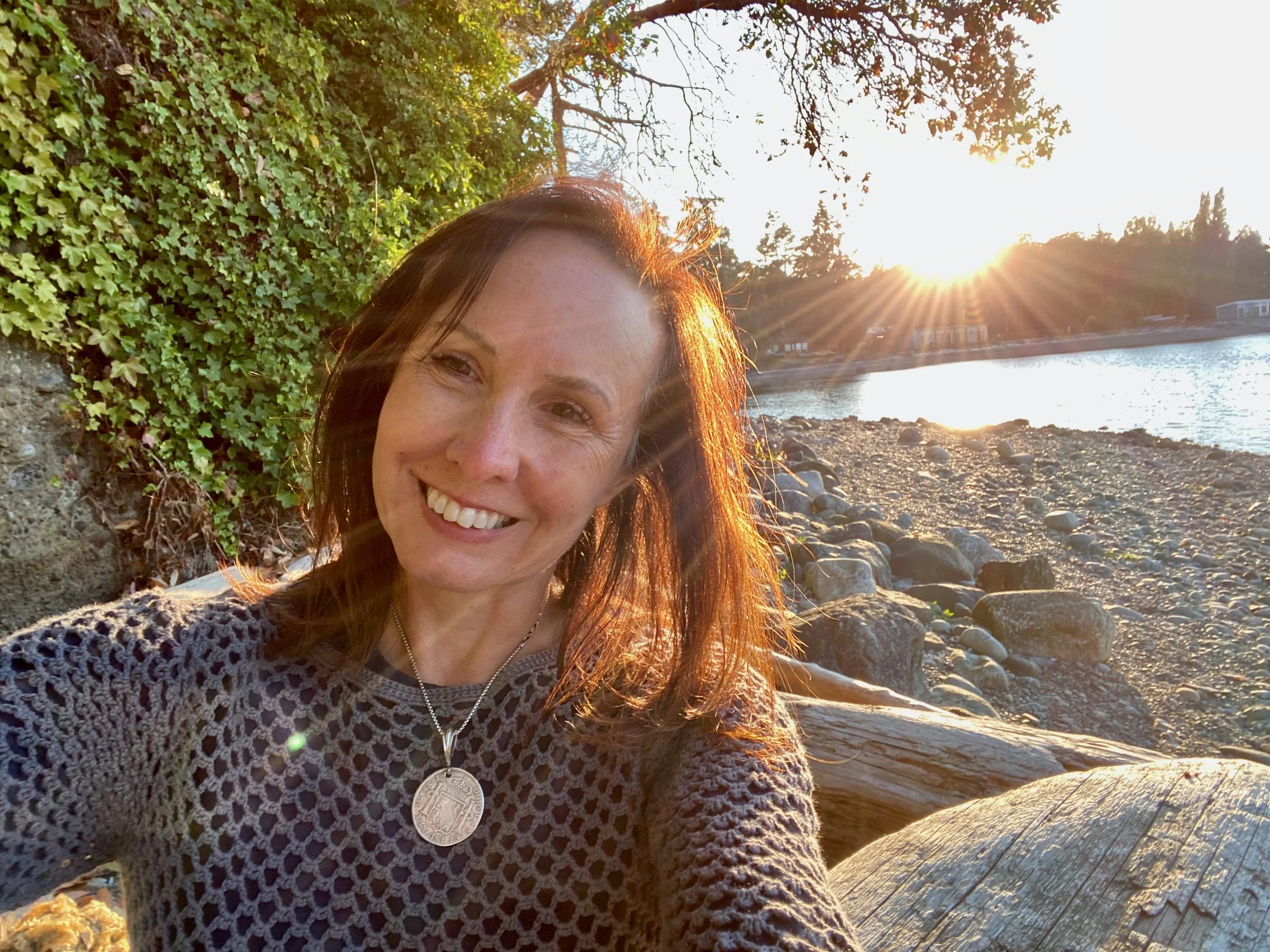
Living authentically today at 58.
Back in the 1980s when my sister and I were teenagers, we used to wonder what we’d be like at our parents’ age. What would we look like in our fifties or sixties? We couldn’t picture it. Couldn’t imagine our young bodies disappearing, sagging. I mostly figured I’d die young. Maybe because I didn’t feel like I had much to look forward to.
I was wrong about that.
A few months ago, I stepped out of the shower and caught my reflection in the mirror. I stopped. I didn’t see what I imagined so long ago. My skin was smooth, not sagging. My muscles were firm. No varicose veins like my mother. No stretch marks, even after carrying twins. I stood there trying to reconcile what I was seeing with the number 58, and they didn’t line up.
Then I closed my eyes and went inward. I scanned my insides. My feelings. My energy. And that energy didn’t match my chronological age either. I feel more alive, with more energy, more clarity, more strength, and joy than any time in my life.
I opened my eyes and asked the question out loud. How can this be? How can I feel so good just shy of 60?
That question sent me back just 7 years ago when my body was a wreck. Back to who I was in my youth. Back to the beliefs I carried, the nervous system I’d been running on, the stories I’d swallowed whole before I was old enough to question them. I wanted to understand the distance. What shifted. And what brought me back to wholeness.
This is what I found. Not a hack. Not a miracle. A pattern that the research supports and my bloodwork confirms. Age didn’t predict my decline. My beliefs did.
Where I Learned to Run
My mother said she was spoiled as a child, and she wasn’t happy with herself. She felt like a failure. She had excessive anxiety and low self-esteem. She knew she didn’t want her children to be like her. So she did the opposite. Gentle parenting was out, corporal punishment was in.
I lied a lot as a kid. About big things, little things. It didn’t matter. I wanted attention and would do anything for it. This drove my mother mad.
I would hear the slow creak of the kitchen drawer, home to a thick wooden paddle. My nervous system knew what came next before my mind did. Her footsteps down the hallway. The bedroom door opening. Paddle in hand. Terror flew through my small body. Then the spanking. The shaming. And the fear of being totally alone in my pain.
I thought I was a lot to handle. Maybe I deserved it.
My elementary school days were met with the same fear and shame. Mrs. Lautum, our principal, seemed to enjoy commandeering the cafeteria stage, paddle in hand, slapping to the rhythm of her menacing march. Teeth clenched, jaw tight, she threatened any child who dared to speak during the lunch hour.
Life in my sparse suburban cul-de-sac was dim. My parents fought constantly. My alcoholic dad hit my mother. I remember one night, maybe I was eight years old. Sound asleep. My mother came into my room and told me to pack a bag. We’re leaving. Now. No time to change. As I stepped into the living room, I saw my father standing in the kitchen. Shotgun resting on his thigh. A look of complete dissociation. A man I did not recognize.
Then the humiliation of arriving at a neighbor’s doorstep in the middle of the night. That shame and anxiety took up residence in my gut where it lived as constipation, control, fear.
Frequently after a major blowup, my mother would pull my sister and me out of school. She was on the run. That’s where I learned running kept you safe. We’d be out of school for days, sometimes a week, staying in worn-down travel lodges in small, depressing Texas towns. Always worried. Always bracing. For a fight. For attention. To be noticed, loved, held.
Life was chaos, bookended by stretches of neutrality. Flatness. With occasional flickers of connection, laughter. Just enough to keep me reaching for it. Never enough to trust it.
The Woman That Childhood Built
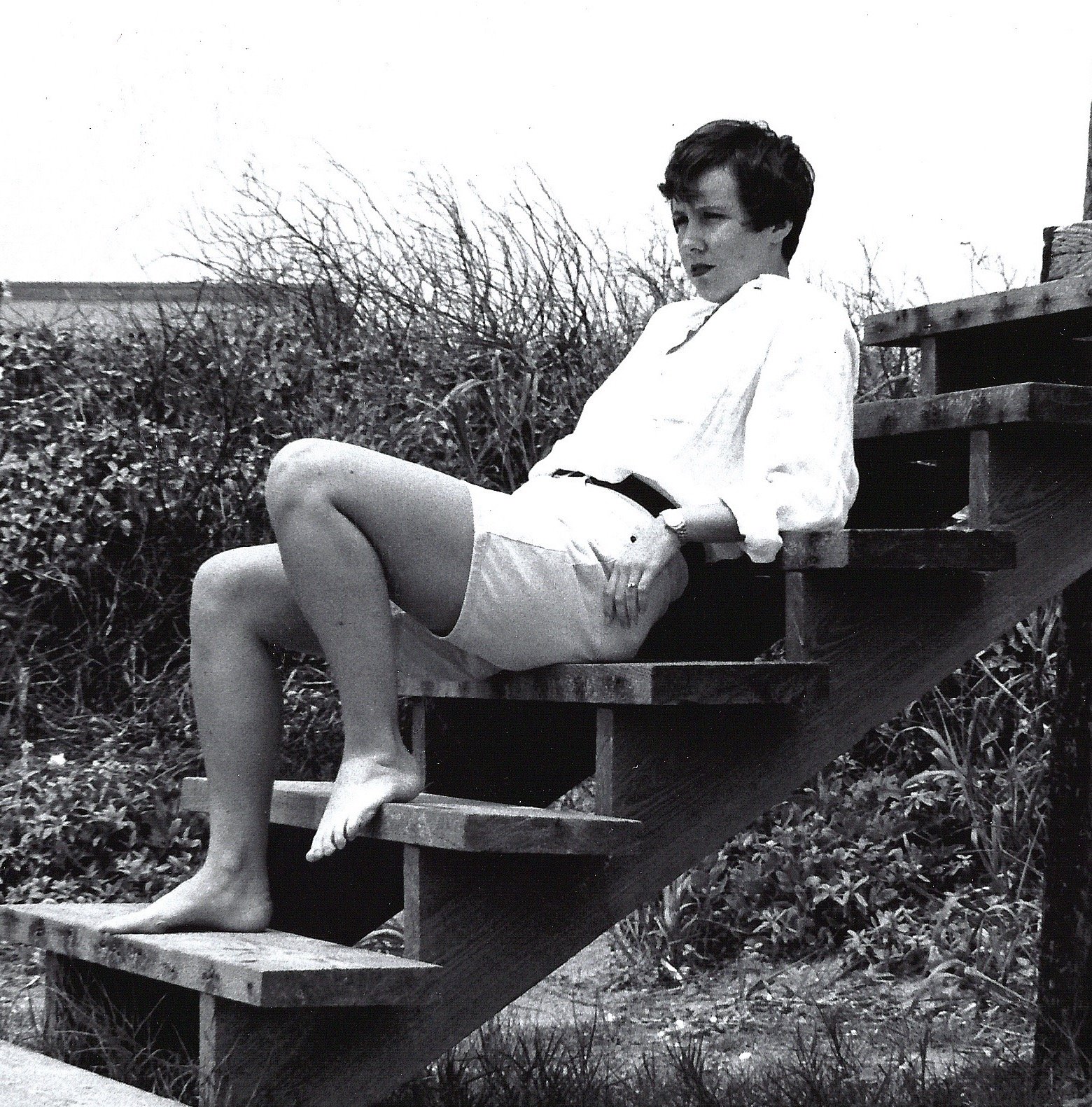
My 28-year old self believed her worth was measured in output. She produced to be necessary. She earned love through service and sacrifice.
I hardly recognize the woman I was at 28. She’s a familiar face in a hazy dream from long ago. She lived in Houston, Texas. Communications director. Focused. Driven. Running a nervous system that had been on high alert since before she could read.
I adopted my identity from the energy and beliefs of my family, school, friends, and hometown. I echoed their fears and swallowed the sorrows of my family’s past and present. I was them, they were me. All tangled up in distortion so thick we couldn’t see our light.
The beliefs ran deep and I never questioned a single one.
Life is hard. Push through.
No one is coming to help you. You are alone in this.
My needs are not as important as others’. I must serve to be loved.
Rest is laziness. Worth is measured in output.
Stop complaining. Keep producing.
Children don’t decide what they believe. Their nervous systems decide for them.
My beliefs forged my body. It was a thing to manage and command. I spoke harshly to my reflection. Too heavy. Hated my curly hair.
When I was 27, desperate for children, I was devastated to learn my body had gone rogue. I was a problem to solve. If I couldn’t have children, who would I become? How could I prove my worth, show the world how much love I had to give?
Joy, long forgotten, returned in 1997 with the birth of my twins. My dream came true. I cherished my new identity. Mother. Provider. Playmate.
Four years later I was divorced, almost bankrupted by my husband, my father was dead, and my mother at just 64 was living in a memory care home. I thought I had time to get to know my parents, to know the people behind the pain, anger, silence.
Depression and anxiety filled every part of my mind and body. The joy of being a mother was replaced by incessant panic and fear of losing everything. I was alone, just as my mother predicted. I buckled down and reinforced the walls around my heart. No time to come undone. I had children to care for.
I didn’t know then that my beliefs and my thinking were slowly crushing my spirit, my body and the little girl inside who didn’t remember she was the light. The damage would not show up physically until I was 51, the year of my transition into menopause.
The Calm Before the Storm
I remarried in 2012 to the only person I felt loved me just for me. I didn’t have to push or prove. In 2013, we moved our blended family to Copenhagen, Denmark, for his career. I thought I won the lottery.
Back in the states by 2017, pressure was mounting. In my job, my body and relationship. Menopause hit me like a hurricane. Quiet onset, then a storm surge so furious it left me shattered — my body broken, my mind lost in waves of depression and self-erosion.
I could not hide behind my masks any longer. The body does not lie. The skin on my face, red and raw, showed the world my anger, my shame. Sudden hair loss revealed my need to control, my fear of rejection, the worry that never left my body. Fear raged in my gut, restricting release, enforcing control.
My life was unraveling. My husband, diagnosed with stage 4 cancer, was dying and I was disappearing along with him.
When the Armor Dissolved
We didn’t get last words. In my husband’s final days he stopped talking. We thought we had more time. There was no final “I love you,” no note, no whispered goodbye. I felt lost and abandoned. And instead of collapsing into that pain, I did the only thing I knew how to do: I created.
I visualized and manifested the reality where we lived our perfect partnership — no fights, no miscommunication, just pure love. I wanted what I knew we had but hadn’t trusted ourselves to fully show. I craved the words I never got to hear.
Two months later, I saw his energy, a blue orb hovering over a candle. Then came his words. First through a medium, then within me.
The truth is I never let myself fully collapse. My grief comes out in small spurts like when you squeeze too hard on the last bits of the toothpaste tube — messy and erratic. A moment waiting in line at the grocery store, praying not to lose it at checkout. Feeling my heart melt watching a couple holding hands. Waking up alone in our bed in tear-soaked sheets.
I’m learning — slowly, imperfectly — to let it come when it wants to come. To stop trying to control when and where and how much I feel.
His death purged the walls protecting my heart. The part I closed at age nine because the world was too toxic, too ugly. I connected with parts of myself that were buried long ago. I gave them a voice, love, attention, and they reflected that back to me. I was coming out of the static and into coherence — body, mind and soul.
What Happens When You Befriend Your Body
When I started my healing journey after my husband’s death, I was a skeptic. I’m into science like he was. I’m not into complicated spiritual rituals or magical thinking. I wanted data. Undisputed, quantifiable results. I would be my own test subject. The lab rat.
I was trying to prove this mind-body healing thing was just too damn easy to really work. My belief? Healing was long, arduous, and led by doctors and established scientists with decades of research to back it all up.
I was wrong. I was engaged and consistent, which turned out to be the only qualities that mattered.
I began with breath work. I was shocked to learn there was a right way to breathe and I’d never done it. Fifty-three years of shallow chest breathing, keeping my nervous system on high alert without knowing it. I was annoyed that I would need to spend five minutes, twice a day, doing something so basic. What difference could breathing make?
Within weeks, my shoulders started dropping on their own. My nervous system finally received the signal that it was safe to stand down. That’s how I know breath work landed. Not from a meditation high or a spiritual revelation. From my shoulders. For decades, I’d marinated my cells in cortisol. My nervous system didn’t know any other setting. Five minutes of breathing, twice a day, told it there was one.
Of course I eat reasonably well. I’ve always moved my body. I practice yoga. I lift weights. I don’t live on processed food. But those habits were not new. They didn’t suddenly shift my physiology at 53. I wasn’t inflamed because I missed a workout. I was inflamed because I was living in constant internal pressure.
Next, I set my intention to forge a relationship with my neglected body. This poor, pathetic thing had been supporting me without so much as a thank you in 50 years. Would it even want to talk to me?
To my delight, my body didn’t ghost me. As our daily conversations continued, the messages crystallized. My confidence grew. My body became a trusted friend. And it was producing measurable results.
I started speaking directly to my cells. Not affirmations pinned to a bathroom mirror. A conversation. I thanked them. I asked my body to release outdated patterns. I invited vitality instead of bracing.
I didn’t just say the words. I let myself feel them. I closed my eyes and watched the healing unfold inside me. I saw my cells dividing cleanly. I pictured inflammation cooling. Systems recalibrating.
My body responded to the images as if they were real. I could feel warmth move through my chest. A spreading calm in my gut. It felt like safety washing through my bloodstream.
The brain does not sharply distinguish between vividly imagined experience and lived one. When I practiced feeling safe, my system began producing the chemistry of safety. Dopamine. Serotonin. Oxytocin. Because I gave my body a new signal to organize around.
My words were the invitation.
The feeling was the instruction.
You Are What You Think and Feel
I was starting to trust the conversation between my body and my mind. The next question felt obvious: could I learn to regulate my emotions more effectively?
My mind has never been quiet. It scans. It prepares. It predicts. That worked when I was eight. It kept me safe. But decades later, I was still rehearsing for a fight that wasn’t coming.
I wasn’t attracting disaster. I was expecting it. And when you expect something long enough, you start organizing your life around it.
I decided to run an experiment to understand the quality of my energy. I checked in three times a day with my mind and body to record the data. Here’s what it looked like:
Thought: “I don’t want to deal with this.”
Emotion: irritation, fatigue
Body sensation: tight chest, shallow breath
After a week or so, I’d review my journal. What’s really wild is that the data was revealing my future. What you think and feel most often becomes your body’s baseline frequency.
The mind looks for what it already expects. Mine expected fear. My journal entries told the story of a woman living in the future instead of the now. Worrying about not being enough. Not finding love again. Ending up alone.
That’s when I started thought minding every day. In four weeks, I noticed the difference. A constrictive thought would creep in, but instead of judging it, I would say to myself, “Interesting.” I practiced discernment. Where did this feeling come from? Is it fact or fiction? How do I know?
I don’t have to write down my thoughts anymore. My mind naturally sees challenges as not something to run from, but to embrace with curiosity. My husband’s parting gift was the greatest I’ve ever received. Alone, I was able to learn who I was and who I wasn’t. Folded inside the layers of my deepest fear was my greatest joy. Just being me. No masks, no performance, no shame.
Then and Now: How Beliefs Shape Biology at Every Age
At 28, I believed my worth was measured in output. I produced to be necessary. I earned love through service and sacrifice. The result: chronic anxiety, depression, a body in lockdown, and a spirit slowly suffocating under the weight of someone else’s story.
At 58, I believe in my power to create my experience. My emotions are energy that moves. The result: I’ve never felt more joyful, clear and present. I’m driven by an inner passion to express myself through the healing arts, writing, through building something of my own. Instead of hiding my voice, my quirks, I celebrate them.
At 28, I believed love was conditional. I performed it. I provided affection as currency. I shut down my heart and called the armor strength.
At 58, my love evolved because I started loving myself. I stopped performing and became the frequency of love itself. I opened my heart again. I let myself be the silly, sensitive girl who loved asking questions and helping others.
At 28, my nervous system was wired to defend. Constant surveillance. Scanning every room, every face, every silence for the next threat. It was running that program since the kitchen drawer, since Mrs. Lautum, the paddle-happy principal, since the shotgun on my father’s thigh.
At 58, I still feel my nervous system humming in the background. It can creep into defense mode. But most of the time, it’s quietly doing its job without the vigilance, the drama.
That shift alone changed everything. When your body stops bracing, it starts healing. Inner conflict burns life force. When what you think, say, and do finally match who you actually are, the energy going to maintenance gets freed up for living.
The Body of Evidence: What My Bloodwork Revealed at 58
Every day, for the past 4 years, I’ve asked my cells to take me back 20 years. Remember what vitality feels like. You know how to do this. I said it with conviction. I felt it in my body. And I let go of needing to know how it would happen.
In February 2026, I had five comprehensive panels drawn — lipid, metabolic, blood count, thyroid, and hemoglobin A1C. Marker after marker, my numbers weren’t tracking with a woman approaching 60. They were tracking with someone in her late thirties. Hemoglobin A1C at 5.1 percent. HDL at 88. Thyroid optimal. Liver and kidneys clean. Immune panel calm with no chronic inflammation.
Two markers — LDL cholesterol and blood pressure — haven’t caught up yet. I’m addressing the blood pressure the same way I’ve addressed everything else: letting go of the pressure to perform, to perfect, to overproduce. The patterns that built the pressure are the same ones I’ve been dismantling for five years.
But the pattern across five panels was unmistakable. Coherence, showing up in the data. Twenty years. The exact number I’d been asking my cells for.
My Unbecoming: Why Age Didn’t Predict My Decline
Our culture tells a clean, grim story about aging: you peak young and decline from there. I believed it for decades. I believed the story that vitality belonged to youth. That my best years were behind me before I’d even found them. And that belief cost me joy, connection, and physical wellbeing that were available to me the entire time.
Age did not cause my decline. My beliefs did. My nervous system did. The stories I inherited and never questioned did. When I changed those, my biology changed with them.
When I look in the mirror, I don’t see that 28-year-old or a body in decline. I just see me — silly, resilient, awake. And it works.
For my mother, Carol, who taught me honesty, independence, and respect for the earth and all its creatures.